Can I name a person or organisation?
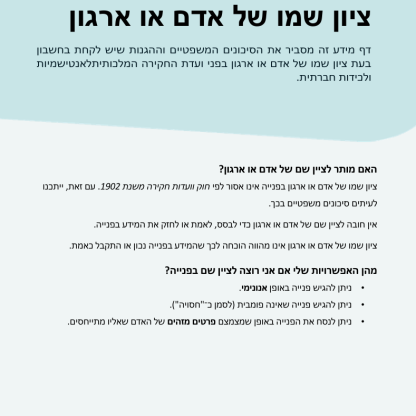
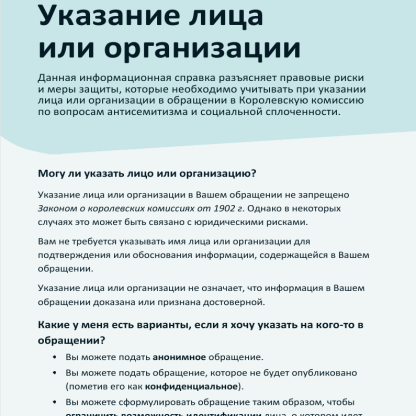
Naming a person or organisation in your submission is not prohibited under the Royal Commissions Act 1902. However, there can sometimes be legal risks in doing so.
You do not need to name a person or organisation to substantiate, validate or reinforce the information in your submission.
Naming a person or organisation does not mean the information in your submission is proven or accepted as true.
What are my options if I want to name someone in my submission?
- You can make an anonymous submission.
- You can make a submission that is not public (mark it as confidential).
- You can frame the submission to limit identifying features of the person you are talking about.
For example: You may use general descriptions instead of names such as ‘a senior manager’ or a ‘community member’ rather than identifying a specific person.
You can also remove or change details that would identify someone, such as exact dates, locations, job titles or unique personal circumstances.
Will the Royal Commission tell the person or organisation what I have said?
If you ask for your submission to be kept confidential, the Royal Commission will not inform the person or organisation that you have named them.
If you ask for your submission to be made public, the Royal Commission may in some cases inform the person or organisation, in the interest of fairness.
It is important to remember that the Royal Commission cannot settle individual complaints or disputes.
Can I be sued for defamation?
Defamation is when information is said or published about a person that causes serious harm to their reputation by changing how others think or feel about them.
You can defame a person without mentioning their name. You can also defame someone without meaning to cause harm.
If you provide information to the Royal Commission about another person, or include details that could identify them, and that information could damage their reputation, the person could try to take legal action for defamation.
In most cases, legal protections or defences apply when information is shared with a Royal Commission. Whether these protections apply will depend on the specific circumstances. We can provide you with information and advice on these protections.
Can I name individuals or organisations on social media?
You should be cautious about sharing information on social media.
If you do, you will not have any of the protections or defences that may be available to you when sharing information with the Royal Commission.
You may be committing an offence if you publish information that is prohibited by legislation.
Could I experience 'payback' if anyone finds out I have named them?
You may be worried about your personal safety or wellbeing if an individual or organisation becomes aware that you have named or identified them in your submission. These concerns are understandable.
You may also be worried that someone could try to
- Disadvantage you,
- Punish you, or
- Negatively affect your employment, education, housing or community.
There are laws and offences that can protect people from certain forms of retaliation, threats or harmful behaviour. If you have safety concerns or concerns about retaliation, you are encouraged to contact us. We can discuss how to protect your safety and wellbeing when you share information with the Royal Commission.
Contact us
You can contact the Royal Commission Legal Assistance Service for free, independent and confidential legal advice.
An interpreter can be arranged upon request.
If you are hearing or speech impaired, you can contact us by calling the National Relay Service on 133 677 (TTY) or on 1300 555 727.
You can find more contact options, depending on your specific needs, on the National Relay Service website.